Overview & Service Scope
Track rollers allow sectional and tilt garage doors to glide smoothly through horizontal and vertical tracks. Over time, cheap steel or unbearing plastic rollers wear down, seize, and drag - creating agonising squealing noises, shaking your home, and burning out the automatic opener. We replace worn rollers with heavy-duty 13-ball bearing sealed nylon rollers.
⚠️ Common Symptoms to Watch For
- • Garage door makes loud rumbling, screeching, or track rattling noises during movement
- • Door shudders, jerks, or hesitates as it rounds the track curve
- • Roller wheels appear cracked, flat-spotted, or wobbling loose on their metal stems
- • Black metallic grit or shavings found inside the vertical track channels
- • A roller wheel has popped completely out of the track
🔍 Primary Mechanical Causes
- • Factory standard unbearing plastic rollers deteriorating after 5–7 years of use
- • Stamped steel rollers wearing grooves into tracks due to metal-on-metal friction
- • Accumulation of grime, pet hair, and dried grease seizing the internal ball bearings
- • Misaligned track spacing pinching roller stems during travel
Our 5-Step Repair & Calibration Procedure
Every repair is conducted in strict compliance with Australian safety standards (AS/NZS 60335), ensuring durable performance and complete household safety.
1. Complete Roller & Track Inspection
We inspect all 10 to 14 rollers along the door panels, checking for bearing play, wheel wear, and stem straightness.
2. Track Cleaning & Degreasing
We wipe out old dried grease, leaf grit, and metal shavings from track channels so new rollers glide freely.
3. Safe Roller Extraction & Replacement
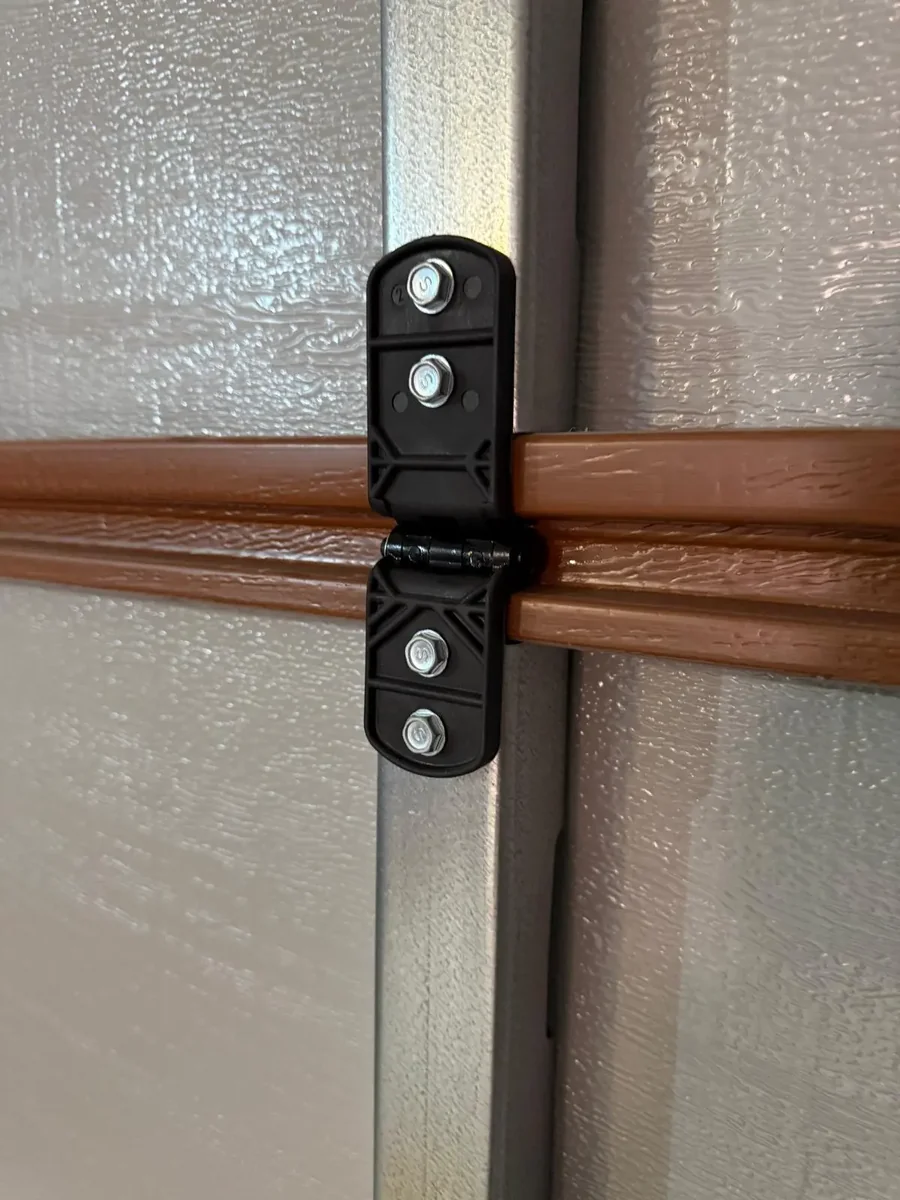
We systematically unbolt intermediate hinges to swap old wheels for 13-ball sealed nylon rollers. Bottom rollers are serviced with spring tension secured.
4. Track Spacing & Plumb Alignment
We adjust track brackets to maintain exact 1/2-inch clearance between the door panel face and track edge.
5. Non-Petroleum Silicone Lubrication
Hinge pivot points and roller stems are lubricated with premium synthetic spray that does not attract dirt.
⚖️ Repair vs. Replacement Decision Guidance
Replacing worn rollers is one of the most cost-effective upgrades available for any residential garage door. Upgrading to sealed nylon rollers instantly eliminates over 75% of operational noise and reduces mechanical drag on your opener motor.
Intermediate and top rollers can be changed safely by a trained technician, but bottom rollers are anchored directly to the high-tension lifting cable. Only a certified trade technician should service bottom roller brackets.
Frequently Asked Questions About Garage Door Roller Replacement
Why are nylon rollers better than steel rollers?
Sealed 13-ball nylon rollers glide smoothly without metal-on-metal screeching, do not require track grease, and absorb vibration so opening your garage won't wake the household.
How long do sealed nylon rollers last?
Our high-grade nylon rollers are rated for over 50,000 to 100,000 door cycles - lasting upwards of 15 to 20 years in normal residential use.
Should I put grease in my garage door tracks?
NO. Grease inside tracks collects dirt, leaf litter, and bugs, turning into a sticky abrasive paste that ruins rollers and burns out openers. Tracks should always be kept clean and dry.